Fence Lifespan by Climate Zone
By Jacob Santos · Published · Last updated
Where you live changes how long your fence lasts. The same wood privacy fence that lasts 20 years in an arid climate may need replacement in 12 years on the coast. This guide breaks down expected lifespan by material and region, and just as important, why each climate destroys fences differently and what maintenance actually buys you more years.
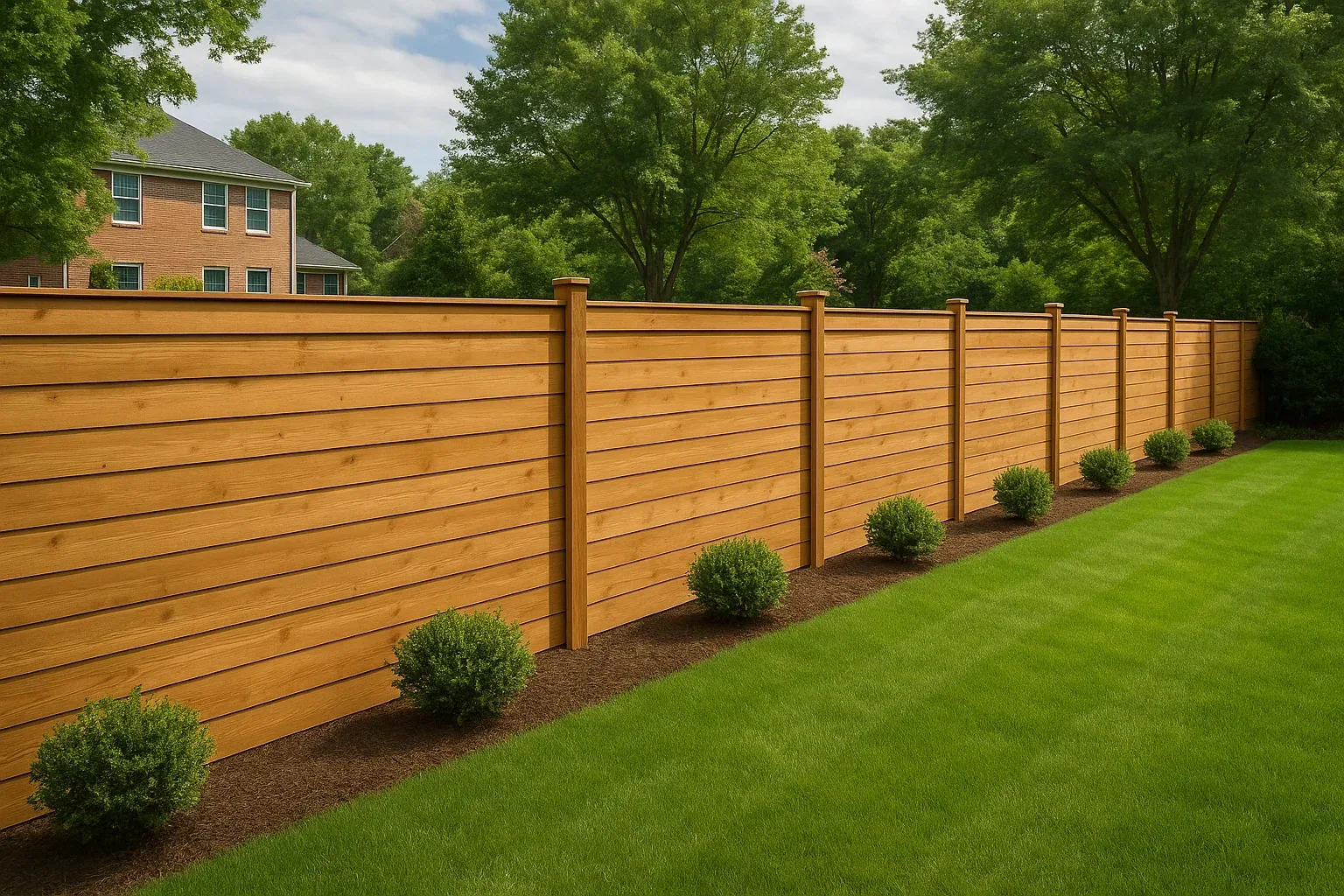
Expected Lifespan by Material & Climate
| Material | Coastal / Salt Air | Humid / Southeast | Freeze-Thaw / Northeast | Arid / Southwest |
|---|---|---|---|---|
| Wood (pressure-treated) | 10-15 yrs | 10-20 yrs | 15-25 yrs | 15-25 yrs |
| Wood (cedar) | 10-20 yrs | 15-25 yrs | 15-30 yrs | 15-25 yrs |
| Vinyl | 20-30 yrs | 20-30 yrs | 15-30 yrs* | 20-30 yrs** |
| Aluminum | 25-35 yrs | 30-50 yrs | 30-50 yrs | 30-50 yrs |
| Chain link (galvanized) | 5-25 yrs† | 15-20 yrs | 20-30 yrs | 25-30 yrs |
| Chain link (vinyl-coated) | 15-25 yrs | 20-25 yrs | 25-30 yrs | 20-25 yrs |
| Wrought iron / steel | 10-20 yrs‡ | 15-30 yrs | 25-50 yrs | 30-50 yrs |
| Composite (capped) | 25-30 yrs | 25-30 yrs | 25-30 yrs | 25-30 yrs |
* Vinyl in freeze-thaw zones: budget or older vinyl becomes brittle below about −10°F. Modern vinyl with cold-weather impact modifiers resists freeze-thaw damage significantly better.
** Vinyl in arid zones: UV causes yellowing and embrittlement, especially without titanium-dioxide (TiO₂) stabilizers. Low-grade vinyl can fail in 7-12 years; premium UV-stabilized vinyl reaches the top of the range.
† Galvanized chain link coastal range is distance-dependent: 5-7 yrs exposed within 250 ft of open water, 15-25 yrs sheltered within a mile, 20-30 yrs further inland.
‡ Wrought iron in coastal zones: salt aggressively accelerates rust once the coating fails. With marine-grade coatings and quarterly maintenance, coastal iron can exceed 50 years.
Ranges assume standard residential maintenance and vary by proximity to coast, microclimate, product grade, and installation quality. Capped composite figures apply to fully-wrapped (360°) boards; first-generation uncapped composite runs lower in wet climates.
Why Climate Destroys Fences: The Four Forces
Every climate attacks a fence through a different mechanism. Match the material to the force it has to survive and you get decades; ignore it and you replace the fence twice.
Salt Corrosion (Coastal)
Chloride ions from sea spray penetrate coatings and drive electrochemical corrosion in any iron-based metal. On the ISO 9223 corrosivity scale, exposed coastal sites hit C5–CX, the most aggressive categories. Galvanized steel within 250 feet of open water can show rust in 5–7 years. Aluminum, which forms a self-protecting oxide layer, is the standout: one marine study attributed just 0.2% of aluminum fence failures to corrosion, versus 19% for powder-coated steel.
UV Radiation (Arid / High-Sun)
Ultraviolet light decomposes lignin, the polymer that holds wood fibers together, so unprotected wood begins surface breakdown within 12–18 months in the desert Southwest. In vinyl, UV triggers photo-dehydrochlorination: the surface yellows and chalks as the titanium-dioxide (TiO₂) stabilizer is released. Low-grade vinyl without enough TiO₂ can fail in 7–12 years in high-sun climates; UV-stabilized vinyl reaches 20–30.
Moisture & Termites (Hot-Humid)
Sustained heat and humidity above roughly 70°F and 80% relative humidity drive fungal wood decay faster than any other U.S. climate, and posts rot at the ground line first. Termite pressure compounds it: subterranean and drywood termites are active across the entire Gulf Coast, all of Florida, and the Atlantic coast south of Virginia (per USDA Forest Service data).
Freeze-Thaw (Cold)
Water seeps into micro-cracks in wood, freezes, expands, and forces those cracks wider with every cycle, the single most damaging force in northern climates. PVC is the other casualty: below about −10°F it loses elasticity and a frozen panel can shatter on impact. Frost heave also lifts and shifts posts that aren't set below the frost line, which can reach 4+ feet in the Upper Midwest.
What to Choose, By Climate Zone
Coastal / Salt Air
Aluminum and vinyl are the clear winners: neither corrodes. Capped composite and vinyl-coated chain link are solid second choices. Avoid bare galvanized chain link and untreated wood near the water, and only choose iron if you'll commit to marine-grade coatings and quarterly upkeep. Whatever you pick, rinse salt off monthly and use stainless hardware.
Hot-Humid / Subtropical
Rot and termites rule here, so the rot-proof, termite-proof materials lead: aluminum, vinyl, and capped composite. If you want wood, ACQ-treated pine resists termites well and, per the Georgia field study, actually outlasts cedar in clay soils. Keep posts out of standing water and seal wood on schedule.
Cold / Freeze-Thaw
Aluminum and ornamental steel shrug off the cold and last longest. Among woods, cedar beats pine because it's more dimensionally stable through freeze-thaw cycles. If you want vinyl, specify a grade with cold-weather impact modifiers. Budget vinyl gets brittle. The biggest lever in this zone isn't the material at all: set every post below the frost line with a gravel base.
Arid / High-UV Desert
Low humidity means rot is rarely the problem: UV is. Iron and aluminum last 30-50 years here. Choose UV-stabilized (TiO₂) vinyl and skip the budget tier, which can yellow and crack in under a decade. White vinyl stays closest to air temperature and ages best. Wood survives if you seal it every 3-5 years to replace the UV protection it doesn't have on its own.
Real-World Field Data
Three regional studies that show how much climate, not just material, decides a fence's fate.
South Florida: Coastal (C5–CX)
In a 2022 review of 120 coastal properties, untreated steel panels installed in 2017 had structurally failed within five years. Marine-grade aluminum (AAMA 2605 coating + stainless hardware) on the same properties was still sound at 25+ years. Ranked for this zone: aluminum > vinyl > capped composite > vinyl-coated chain link > galvanized > treated wood.
Georgia: Hot-Humid (10-yr study)
A 2015–2025 field study from Athens to Atlanta found ACQ-treated pressure-treated pine had zero termite damage over 10 years, with 95% of posts structurally sound at year 10. Cedar posts set in red clay needed replacement at 12–15 years. The takeaway: in Georgia's humidity, treated pine actually outlasts cedar with less upkeep.
Wisconsin: Freeze-Thaw
Madison-area contractor field data puts professionally installed, maintained cedar at 20+ years, with freeze-thaw called 'the most damaging force a fence faces in this region.' Posts set too shallow or without base drainage are the first components to fail, and cedar's dimensional stability gives it a real edge over pine, which cracks and warps at the joints.
Maintenance That Actually Extends Lifespan
The lifespan ranges above assume real maintenance. Skip it and every material lands at the bottom of its range. Here's what each one needs.
| Material | Key Maintenance | Frequency |
|---|---|---|
| Pressure-treated pine | Seal/stain; seal end grain; gravel post base | Every 2-3 yrs (1-2 coastal) |
| Cedar | Stain; seal end grain; soft-brush clean (no pressure washer) | Every 2-3 yrs (1-2 humid/coastal) |
| Vinyl | Wash; inspect for cracks after hard freezes | Annual (monthly rinse coastal) |
| Aluminum | Rinse; touch up chips and scratches | Annual (monthly rinse coastal) |
| Chain link | Seal cut ends/welds; anti-corrosion treatment | Annual coastal; biennial elsewhere |
| Wrought iron / steel | Sand, prime, repaint; address rust spots immediately | Every 2-3 yrs (5-7 arid; quarterly coastal) |
| Composite (capped) | Wash with soap and water; no sealing or staining | Annual (quarterly coastal/humid) |
Sources: ISO 9223:2012 atmospheric-corrosivity standard; American Galvanizers Association; USDA Forest Products Laboratory and Forest Service; AWPA Use Category system; AAMA 2604/2605 finish standards; and regional contractor field studies (Precision Fenceworks GA, Struck & Irwin WI, and coastal marine-materials analyses). Ranges reflect real variability by installation quality, exact microclimate, and maintenance compliance.
Choosing a material for your region? See it on your actual yard before you commit →
Planning a replacement or new install? See installed cost by material or estimate your fence cost →