Backyard Fence Design Trends in 2026
By Jacob Santos · Published · Last updated
Drafted with AI assistance and edited by Jacob Santos, who is accountable for every claim on this page.
Fence design has changed more in the last five years than in the fifty before it. Horizontal lines, black metal, mixed materials, and living walls are replacing the white vinyl stockade. Here's what homeowners are actually building in 2026: what each style costs, how it installs, and who it's right for.
Horizontal Slats Go Mainstream
Horizontal cedar and composite planks (usually 1x6 boards with a tight or narrow gap, often set in black steel or aluminum framing) have moved from a designer flourish to the single most-requested modern style heading into 2026.
- •Why it works: horizontal lines pull the eye across a yard instead of up, creating an illusion of width that makes standard suburban lots feel larger.
- •Materials: stained Western red cedar for warmth, capped composite for zero upkeep, or charred cedar (shou sugi ban / yakisugi), a Japanese technique that delivers rot, pest, and fire resistance and can last decades without chemical treatment.
- •Cost: roughly $35–$55/ft installed for horizontal cedar; composite runs $50–$100+/ft. Expect a 15–25% labor premium over a standard vertical build because horizontal spans need more framing to resist sag.
- •Best for: contemporary and renovated homes, entertainment areas, and anyone who wants the warm-wood-meets-black-metal contrast that defines the look.
Black Metal Replaces White Vinyl as the Default
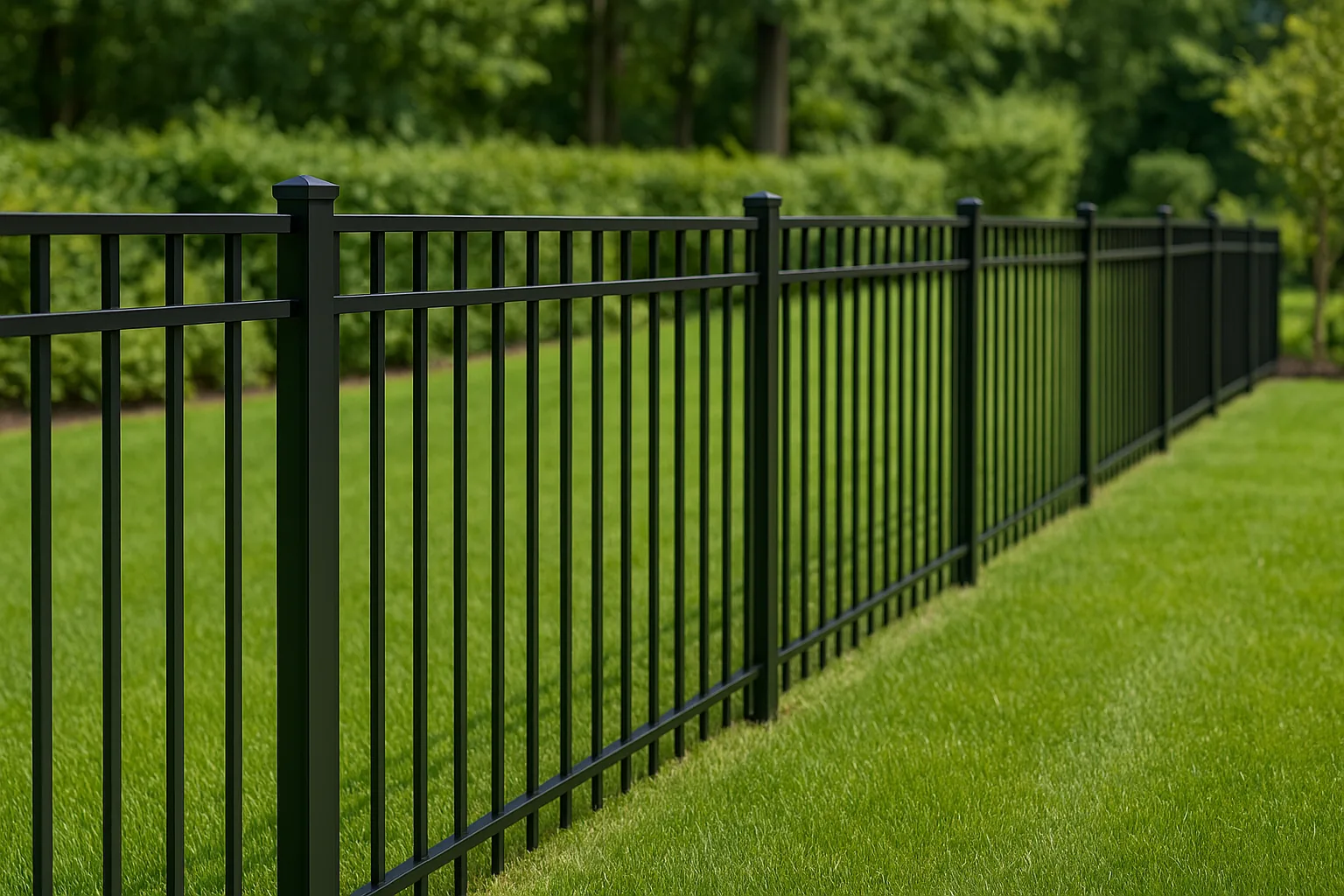
Matte-black powder-coated aluminum and steel have become the go-to for homeowners who want the fence to disappear and the landscaping to take over. Metal now accounts for a large share of new residential installs.
- •Why it works: black reads upscale, pairs with white houses, natural stone, and wood accents, and turns foliage into the star: a dark fence visually recedes.
- •Materials: powder-coated aluminum (rust-free, lightweight, modular), galvanized or corrugated steel panels, and black powder-coated stainless cable for a near-invisible boundary.
- •Cost: $20–$55/ft installed for standard residential aluminum; aluminum privacy-panel systems $63–$113/ft; all-steel kits $50–$65/ft in materials with effectively zero maintenance and warranties up to 40 years.
- •Best for: modern and minimalist homes, pool enclosures, wildfire-risk areas (steel is non-combustible), and homeowners who never want to stain or paint.
Mixed Materials Become the High-End Standard
Single-material fencing is giving way to combinations that used to require a custom fabricator: stone or brick columns with horizontal wood or composite infill, ornamental iron out front paired with private cedar in back, vinyl panels between masonry piers.
- •Why it works: mixing materials lets each one do its job (masonry for permanence and curb appeal, wood or composite for warmth and privacy, metal for structure), so the fence reads as part of the landscape design rather than an afterthought.
- •Materials: cedar/composite slats on black steel frames (the most common combo), stone or faux-stone columns, brick wing walls, vinyl-with-stone for a timeless look.
- •Cost: additive and project-specific, typically $60–$150+/ft once masonry columns and their separate footings are included; faux-stone panels cut cost while keeping the look.
- •Best for: higher-end properties, homes with existing brick or stone, and owners who want a polished street-facing fence plus a functional private backyard.
Privacy Without the Fortress Look
Shadowbox, board-on-board, and louvered designs are replacing the solid stockade. They block 80–90% of sightlines while letting air and light through, and they look finished from both sides, which keeps neighbors happy.
- •Why it works: the gaps that soften the look also let wind pass through instead of slamming a solid wall, so these styles hold up better in windy regions and help buffer road noise around patios.
- •Materials: cedar or pressure-treated pine in shadowbox/board-on-board layouts; vinyl and aluminum louvered panels (some with adjustable slats) for a maintenance-free version.
- •Cost: shadowbox $28–$50/ft and board-on-board $28–$55/ft installed; horizontal versions add the usual 15–25% labor premium.
- •Best for: dense suburban backyards, wind-prone sites, and homeowners who want full-feeling privacy without a flat, heavy wall.
Living & Green Fences
Plant-based boundaries (dense evergreen hedges, climbing vines on wire or trellis, and fences with built-in planter boxes) are surging as homeowners lean into sustainability, biodiversity, and a softer look.
- •Why it works: living fences filter pollutants, support pollinators, cool the yard, and satisfy HOAs that restrict hard fencing. Built-in planters and vertical-garden panels add depth and hide plain walls.
- •Materials/plants: boxwood, laurel, and emerald arborvitae for year-round screening; jasmine, climbing hydrangea, wisteria, and variegated kiwi vine for trellised greenery.
- •Reality check: a living fence needs 2–5 years to fill in and pruning 2–4 times a year. Use evergreens for true year-round privacy. Deciduous vines leave a bare skeleton in winter.
- •Best for: eco-conscious owners, wildlife gardeners, and naturalistic landscapes, often paired with a wire or low hard fence for security while the planting matures.
Also Trending in 2026
Six more shifts shaping backyards this year, from how fences are lit to what they're made of.
Integrated Lighting
Solar post caps, recessed railing LEDs, and motion-sensor fixtures ($50–$100 each) add curb appeal and safety, especially on corner lots and long driveways. No wiring required for solar options.
Cable Railing
Marine-grade stainless cable (Type 316 for coastal) strung between cedar or metal posts preserves sightlines. Black powder-coated cable is surging: it reflects less sun and nearly disappears. 30+ year lifespan.
Gabion Walls
Wire baskets filled with stone, now a residential design feature for screens, retaining walls, and seating. Mass + irregular surface absorbs road noise, and the stone voids double as planting pockets.
Composite & Sustainable
Capped composite (Trex, TimberTech, NewTechWood) made from 60–95% recycled content never needs staining. Dual-tone fluted boards now mimic the wood-on-black-metal look in a single board.
Smart & Secure
Keyless and smartphone-controlled gates, integrated cameras, and motion lighting are moving from commercial to residential. Smart locks on side gates are becoming as common as smoke detectors.
Warm Tones & Charcoal
Gray is receding; warm cedar stains, charcoal (Kendall Charcoal, Peppercorn), and sage-green accents lead 2026. Two-tone posts-vs-panels are gaining traction in composite and vinyl.
2026 Cost Reference: Installed, Per Linear Foot
National-average installed pricing (materials + labor) for the styles driving 2026 design. Actual cost varies by region, grade, height, and terrain.
| Style / Material | Installed Cost / LF |
|---|---|
| Cedar privacy (6 ft) | $25–$50 |
| Horizontal cedar | ~$35–$55 |
| Shadowbox / board-on-board | $28–$55 |
| Vinyl privacy | $30–$60 |
| Aluminum (residential) | $20–$55 |
| Aluminum privacy panel system | $63–$113 |
| Composite (installed) | $50–$100+ |
Pricing and trend data compiled from 2026 industry and contractor sources including HomeGuide, BuyAFence, Scheiderer Fence, Homewyse, Aluminum Fences Direct, and manufacturer trend reports (Trex, TimberTech, BarrierBoss, Nakamoto Forestry). Ranges are national averages; get a local bid for an exact figure.
Want to see a 2026 trend on your property? Try horizontal slats, black aluminum, or mixed materials on your actual yard →
Budgeting one of these looks? Estimate the cost by material and footage or read the installation cost guide →
See It in Your Own Yard
You have the number. Now see the fence on your actual house. Upload a photo, pick a style, and the Fence Visualizer renders it in seconds.
One-time purchase. No subscription, no app.